Posts Tagged “Florida Museums”

Vero Beach Museum of Art – Building Exterior and Entrance
Vero Beach Museum of Art: Created Entirely With Private Funds
I love Vero Beach Florida. There’s just something about the atmosphere in this little coastal town that is warm and inviting. Vero Beach, located right along the Atlantic Ocean, is a popular vacation destination just like much of the Sunshine State, but the vibe is different here. Tourists aren’t tripping over themselves, nor stepping on my freshly painted toenails! To me, Vero Beach has a more upscale feel. The casual elegance can be felt whether you’re driving through the older affluent neighborhoods, sneaking a peek inside the chic boutique hotels, sipping champagne in the classy dining rooms like the Ocean Grill, or window shopping the posh specialty stores.
But the very heart and soul of Vero Beach is in its arts and culture scene. Embedded within the borders of this beachside beauty you’ll find theater, opera, film, music, literature, and art. A lot of art! In fact, a thriving art community like this on Florida’s Treasure Coast was a bit of a surprise to me. I didn’t realize Vero Beach was so artsy. Everywhere you turn, this laid-back little town has a quietly sophisticated art gallery… or two or three or ten.
It’s no wonder then, that the Vero Beach Museum of Art (VBMA) is the nation’s largest art museum created entirely with private funds.
History (from the Vero Beach Museum of Art official website)
“Established in 1978.
The Vero Beach Museum of Art grew from the efforts and vision of two community arts groups: the Vero Beach Art Club and the Alliance for the Arts. The organizations raised funds from local private sources and the Museum, known as the Center for the Arts, opened its doors to the public debt free on January 31, 1986. In 1997, the Museum earned and was awarded accreditation from the American Alliance of Museums (AAM). Then in 1999, it launched a successful expansion campaign, which doubled the size of the facility to a total of 54,509 square feet. In 2002, its name was officially changed to the Vero Beach Museum of Art. More growth followed in 2007 with the creation of the Alice and Jim Beckwith Sculpture Park, and again in 2011-2012 with the Beckwith North Park Plaza Sculpture Park, a grand skylight covered Atrium, new entrance vestibule and the construction of a new Exhibitions and Collections wing, bringing the Museum’s total square footage to 75,228.”

Vero Beach Museum of Art – Located in Riverside Park, Vero Beach Florida
Vero Beach Museum of Art: Free Admission with American Horticultural Society Membership
I was excited to visit the Vero Beach Museum of Art (VBMA) for the first time. The Museum is located in a somewhat secluded section of town called Riverside Park, a sprawling park with a lush tropical setting. Across the street from the Museum of Art is the Riverside Theatre, named America’s largest small town professional theatre. This complex is the cultural epicenter of Indian River County. Between theatre shows, lecturer series, comedy acts, concerts, and special events, there’s always something going on here.
As hubby and I entered the Vero Beach Museum of Art, the cashier was friendly and welcoming. We received FREE admission because we are members of Bok Tower Gardens in Lake Wales, Florida. If you’re not familiar with the reciprocal benefits of the American Horticultural Society (AHS), you can view the program details here. Additionally, here’s a printable state by state list of the participating national botanical gardens, arboreta, and conservatories. With 320 museums, gardens, and attractions offering free or discounted admission, a Horticultural Society Membership pays for itself with just a few visits. In fact, a botanical garden membership made the cut for FloridaFunAndFork’s article “8 Unique Gift Ideas for Florida Residents.”
Regular admission price into Vero Beach Museum of Art for two adults is $20 ($10 each), so we saved 20 bucks on this visit! (Enough to buy two grande Caramel Macchiato’s from Starbucks — the perfect midday pick-me-up before heading to our next attraction!)
***TIP: The last Saturday of every month (unless otherwise indicated) is free Museum admission.
***NOTE: There is ample free public parking for the Vero Beach Museum of Art.

Outstanding Traveling Exhibits at Vero Beach Museum of Art
Museum of Art in Vero Beach — Small But Impressive
Certainly, walking into Vero Beach Museum of Art doesn’t have the same WOW factor as entering the Smithsonian or The Metropolitan Museum of Art, but then again, Vero Beach is far removed from the hustle and bustle of Washington D.C. or New York City! To me, Vero Beach Museum of Art is a direct reflection of Vero Beach itself… small but impressive!
The American and international art collections are displayed in a bright and airy contemporary setting. The Museum’s permanent collection includes over 880 works of art from the early twentieth century to the present, in a broad range of media — Glass, Paintings, Photography, Screen, Sculptures, Video, and Works on Paper. Each exhibit was small, but impressive and informative.
There were also three traveling exhibitions during our visit — Shadow and Light: The Etchings of Martin Lewis; Paul Outerbridge: New Color Photographs from Mexico and California, 1948 – 1955; and my favorite, Medieval To Metal: The Art & Evolution Of The GUITAR. (The latter was extremely interesting and educational.)
***NOTE: The Vero Beach Museum of Art has received TripAdvisor’s Certificate of Excellence Award, meaning they consistently earn great reviews from travelers. Additionally, the Museum is rated #5 of 85 things to do in Vero Beach.

Paintings from the Permanent Collection at the Vero Beach Museum of Art
Helpful Docents at Vero Beach Museum of Art
As with any quality art museum, there was an abundance of personnel (security guards, staff, and docents) strategically stationed throughout the museum. Don’t let their presence intimidate you. Simply obey the rules of conduct, (standard for most art museums), and they won’t bother you. Don’t touch the artwork, don’t let your kids run wild, and don’t use flash photography. Pretty easy to comply with, eh?
The docents at the Vero Beach Museum of Art are awesome! The lady helping us was extremely knowledgeable and passionate when explaining the history and/or creative process behind any given work of art. She was unpretentious in her approach, not attempting to impress with her knowledge, only wanting to inspire. Her only desire was to humbly present enough detail to instill a greater appreciation for what we were looking at. It was not information overload, by any means. She only contributed if we showed interest in a specific work of art, otherwise, we were free to browse without interruption.
Favorites from the Museum’s Permanent Collection
Even though Vero Beach Museum of Art is small by most museum standards, hubby and I spent about 90 minutes there. The Museum has an incredible outdoor sculpture garden that was worth at least 30 minutes of our time. (I could have easily lingered longer, but this was a travel day for us, therefore hubby was anxious to get back on the road!)
I’m pleased to share with you some of my favorite art from the Museum’s permanent collection…

Sculpture by Federico Uribe: Chopsticks and Plastic Forks
This indoor sculpture by Federico Uribe is amazing at first glance. Then, when you realize what it is constructed from, it is even more spectacular! Take another look at my close-range shot on the right. Yes, those are actually wooden chopsticks and plastic forks! The creative mind of some artists is simply astonishing!

Deborah Butterfield Bronze Horse Sculptures
Here’s another work of art that is not what it appears to be at first glance. Actually, I was standing in close proximity staring at its beauty for quite a while before realizing what the material was. The horse sculpture looked as if it was made with twigs and tree branches, but it was pure bronze! The docent then approached me and explained the incredible detailed process that was used to create this sculpture.
The artist is famed sculptor Deborah Butterfield. Initially, Deborah uses found tree branches and wood pieces to create the horse sculpture. She then delivers the completed sculpture to a foundry who goes through the following process to make it into a bronze sculpture:
- The sculpture is photographed and each piece documented
- The sculpture is dismantled, one stick at a time, to be cast
- A ceramic shell coating is put over each stick
- Put into an oven until the wood is completely burned away
- The shell becomes the mold which is dipped into a plaster-based material and put into another kiln
- Molten metal (bronze) is poured into the mold
- Once solidified, the mold is broke open, and the cast cleaned
- The sculpture is reassembled using the original photographs
- Patina is applied by Deborah at the foundry to give the look of wood
- The sculpture is transported by truck to its new home (museum) and strategically placed using a crane
After hearing how the wooden pieces are all transformed into bronze, I was even more impressed with Deborah’s horse sculptures. There was a small one inside the Vero Beach Museum of Art and a life-sized one outside in the sculpture garden.

Amber Onyx Sculpture by Elizabeth Catlett
The above sculpture was formed with amber onyx by African-American artist and sculptor Elizabeth Catlett. In a career spanning more than 70 years, this granddaughter of slaves used much of her art to advocate for social change in the United States with themes relating to race and feminism.

Security Guard Sculpture at Vero Beach Museum of Art
Okay, honestly… this sculpture freaked me out! The lifelike security guard sculpture was so realistic that I actually ignored him when I first entered this exhibit room, thinking he was real. Previously, I mentioned the abundance of security personnel throughout the Vero Beach Museum of Art, so I thought this guy was one of them. It wasn’t until I seen hubby checking him out that I realized he was part of the exhibit. And even then, I very slowly walked up to him. Call me skeptical, but I’ve seen too many Disney human statutes that pose motionless for extended periods of time. I was expecting him to jump up and scare me at any moment! By the way… the name on his name tag was Art. How appropriate. He sure is a work of art!

Medieval to Metal: The Art & Evolution of the GUITAR
Medieval To Metal: The Art & Evolution Of The GUITAR
Medieval to Metal is a touring Exhibition of The National GUITAR Museum. It traces the history and design of the world’s most popular musical instrument — from ouds and lutes to classical acoustic and modern electric. The exhibit included a nice variety of 40 historic instruments, along with illustrations and photographs of well-known guitar players of the last 100 years.
“The guitar has been a signature element of world culture for more than 500 years.”
— Harvey Newquist, Executive Director of the National Guitar Museum
A few of my favorites from the guitar exhibit:
- The eye-catching angles, sharp points, and sweeping curves of the candy apple red Warlock Guitar. This one was made from acrylic and was popular with hard rock and metal guitarists as it produced loud, forceful, in-your-face music. It was used by artists like Paul Stanley of KISS, Kerry King of Slayer, Lita Ford, and members of Motley Crue.
- The Godwin Guitar Organ was fascinating with its 19 switches and 13 knobs, the most ever applied to a guitar body! This instrument could be played as a guitar, organ, or both simultaneously.
- The Italian-made EKO 700 was a visually arresting instrument with its dramatic curves, gold sparkle paint, large swaths of chrome, and more buttons than American guitars.
- The Rickenbacker 360/12 12-String was made famous by George Harrison of The Beatles when he played one in the film “A Hard Day’s Night.” The quasi-psychedelic sound of the 360/12 became synonymous with folk-rock in the 1960s.
- The Gretsch Chet Atkins 6122 Country Gentleman with its dark wood finish is the signature guitar of one of Nashville’s greatest pickers. The Chet Atkins Line was started in 1958 and remains a staple of the company’s offerings today.
- The image of The Gibson Flying V has become one of the primary symbols of the electric guitar, used as a generic representation for Rock ‘n Roll in everything from television commercials to clothes. In fact, the world’s largest guitar is a 43.5 foot long replica of the Gibson Flying V.
- The “Crossroads” Guitar was commissioned to represent one of the oldest myths surrounding the guitar. Legend has it that great pioneering blues guitarists who worked their way across the southern United States would cut a deal with the devil. If they sold their soul to the devil he would grant them fame and fortune as rock stars for the rest of their life. Upon death, payment to the devil becomes due… the guitarist would accompany him to Hell! The carvings on this instrument are images of guitars, guitarists, graveyards, and demons.

Guitar Exhibition at Vero Beach Museum of Art

History of the Guitar

Guitar Exhibit at Vero Beach Museum of Art
Vero Beach Museum of Art Sculpture Garden
I love sculpture gardens. The fact that Vero Beach Museum of Art has a generously sized one certainly influenced my decision to visit. And I was not disappointed! The monumental sculptures are perfectly placed throughout a beautiful landscape of flowering trees, perennials, towering palms, and garden paths with benches for relaxation or meditation. In Florida’s cooler spring months the Museum hosts Concerts in the Park that attract more than 200 visitors each concert. Guests can listen to smooth jazz and soulful renditions while in a unique visual arts environment.

Sculpture Garden at Vero Beach Museum of Art:
Bronze and Cor-ten Steel Sculpture by Dutch Sculptor Hanneke Beaumont

Vero Beach Museum of Art Sculpture Garden
Children’s Art Zone at the Museum
The Vero Beach Museum of Art is not just for adults. They love to see children come through their doors as well. The brand new Art Zone is proof of that. On January 24, 2018 the Museum celebrated the grand opening of the interactive children’s space, after nearly 18 months in the making.
The Art Zone is a great way for families to explore art together. It features hands-on activities from floor to ceiling, and encourages kids to use all five senses as they play and explore. The Art Zone includes ten different play areas including magnetic and chalkboard walls, a giant puzzle floor, a ceiling comprised of the major constellations, a puppet theatre, a gallery wall, and an interactive projector wall. As I peeked inside the Art Zone, I could tell the children also love the white modular furniture cubes, which can be turned and shifted to create tables, chairs, tunnels, and cozy little reading nooks. My favorite part was the 25-foot-long interactive Sketch Aquarium. It was so realistic that young children must think they are actually swimming amongst the various sea life.
As attendance in family programs has tripled in the last several years, it was imperative the Museum construct a family friendly space for kids to connect with art., and they most certainly succeeded. As I stood in awe of this awesome haven for kids, looking up at the dazzling starry night ceiling, a toddler boy approached me with a musical instrument. He said, “You hold.” As I received his instrument he said, “You play.” Doing my best, I noticed he was smiling from ear to ear. Then this cute kid said, “You sing!” Having a young grandson of my own, I’m known to do almost anything to make a child happy. But sing, in public? Uh, no!
As I exited the Art Zone, I couldn’t help thinking that I will likely be seeing this little boy’s creativity on display in the Museum’s Eggert Children’s Gallery in a few years. An entire section of the Vero Beach Museum of Art features exhibitions of student artwork from schools and organizations serving K-12.

Children’s Art Zone at Vero Beach Museum of Art

VBMA Children’s Art Gallery

VBMA: Middle School Best In Show
In Conclusion…
Sometimes, little can be much, when done right. For a small museum the Vero Beach Museum of Art is pretty impressive. It’s in a lovely setting, they have a great selection of artwork, and the traveling exhibitions are top-notch. The Museum includes indoor and outdoor exhibits, including the outstanding sculpture garden. Plan to spend 60-90 minutes here, and grab a coffee or light lunch at The Museum Café by Wood ‘n Spoon located in the Museum atrium (11am – 2:30pm, closed Sunday’s). And don’t leave without visiting the Museum Gift Shop where the offerings are well chosen, whether for personal pleasure or to give as a special occasion or hostess gift.
For art and design lovers, I highly recommend VBMA, especially if you’re passing through Florida’s Treasure Coast. For hubby and I it was time well spent in this little town and a very positive experience.
***NOTE: If you’re an art enthusiast who lives in the Vero Beach vicinity, the VBMA offers adult and children’s art classes in a variety of mediums. The Summer Art Camp is a popular option. You’ll also want to consider a Vero Beach Museum of Art Membership, with flexible plans starting at just $45.
Vero Beach Museum of Art Hours:
Monday – Saturday 10:00am to 4:30pm • Sundays 1:00pm to 4:30pm • Closed Mondays from Memorial Day through Labor Day.
Vero Beach Museum of Art Address and Phone:
3001 Riverside Park Drive
Vero Beach, FL 32963
Phone (772) 231-0707

Bailey Matthews Shell Museum on Sanibel Island
Bailey Matthews National Shell Museum on Sanibel Island
There’s no other museum in the entire United States quite like the Bailey Matthews National Shell Museum. It’s the only museum stateside that is entirely devoted to shells and the mollusks that create them; that’s what makes it so unique. It’s located on Sanibel Island, a small island off the Southwest coast of Florida (14 miles west of Ft. Myers) in the Gulf of Mexico.
Sanibel Island’s claim to fame is its beaches. USAToday ranks the Seashells of Sanibel as the 7th of Florida’s Best Attractions overall (right on the heels of Disney’s Magic Kingdom, so you know Sanibel is pretty spectacular!). It consistently ranks at the top of Travel & Leisure’s 10 Best U.S. Shelling Beaches. And, internationally, it’s known as one of the best shelling beaches anywhere. So what better place to have a shell museum than right in the middle of the shelling capital of the world!
The Bailey Matthews Shell Museum was conceived in 1984 and opened its doors to the public in 1995 — a dream-come-true for many Sanibel shell enthusiasts. Since its inception it has operated as a reference center for students and scientists, both nationally and abroad. During my last visit some researchers from out of the country were working upstairs (not accessible to patrons) to assist with curating and organizing part of the Shell Museum’s vast mollusk collection. It’s been an ongoing effort for many years.
Bailey Matthews Shell Museum has become the premier destination for anyone interested in terrestrial, marine, or land mollusks of the Gulf of Mexico and Florida. Lecture Series are commonplace and given by leading specialists in malacology (the branch of zoology that deals with mollusks) and natural history. Seashell aficionados young and old have benefited from the Museum’s findings — shell clubs, community groups, public schools, home-schooled children, churches, and retirement homes. In fact, an official collaboration with Lee County schools was started in 1997.
The Bailey Matthews Shell Museum was named in honor of the family who donated the 8 acres of land where it was erected, and operates as a 501(c)(3) non-profit organization. Marine biologist José H. Leal, Ph.D., serves as Curator and Scientific Director of Education.

Bailey Matthews National Shell Museum Exterior
Sanibel Island is World Renowned for its Shelling Beaches
Many of the sea shells that end up in Bailey Matthews National Shell Museum are found on Sanibel Island, Captiva Island right next door, or neighboring barrier islands in the Gulf of Mexico. If you look closely at the photo below, you’ll notice that the sand on this Sanibel Island beach is covered with seashells! I have never seen such a high concentration of shells as what I experienced on the beaches of Sanibel. As a Florida resident I’m accustomed to walking barefoot on our beautiful sandy shores. But… not here! It’s a dangerous thing because of the multitude of shells. I overheard a lady in a Sanibel Island gift shop tell her friend that she cut her foot very badly on some shells, even with sandals on. For her, it required an emergency trip to the hospital; not the way to spend a vacation in paradise!
TIP: Always wear protective beach shoes while on Sanibel Island’s shell-strewn beaches. Although the pastel-colored shells are stunning to look at and exciting to collect, they’re likely to cause injury if proper footwear is not worn.

Sanibel Island is World Renowned for its Shelling Beaches!

Sanibel Island Florida – Shelling Capital of the World!
Southwest Florida Shell Guide: A Work in Progress!
I had a blast searching for and collecting shells on Sanibel Island. The locals are awesome, always eager to help a bona fide novice like me learn the secrets to successful shelling.
- Rule #1: Learn the “Sanibel Stoop!” Scouring the beach with a bent-over posture will yield better results.
- Rule #2: Buy a shovel! The plastic kiddie-kind will do just fine. Prized shells are like most other valuable treasures — found just below the earth’s surface with a little digging.
There were so many unusual shells, very different from what I find on beaches elsewhere in Florida. Since I’m not a serious shell collector, and I’m far from being an expert at seashell identification, I needed a lot of help distinguishing one from another. The Bailey Matthews Shell Museum was the perfect place to assist.
José H. Leal created the Southwest Florida Shell Guide. It depicts hundreds of shells, but has an emphasis on those collected on Sanibel and Captiva Islands. The Shell Guide currently has 349 species listed but is continually being expanded and updated. Various information is given for each type, along with a photo for easier identification. But here’s the best news of all… you don’t have to travel to Sanibel Island or the Bailey Matthews Shell Museum to gain access to this information. It’s available to anyone via the Shell Museum’s website. Simply click this link to open the Southwest Florida Shell Guide.

The Sanibel Island Stoop

The Sanibel Stoop with Shovel – Demonstrated By My Good Friends!
Bailey Matthews National Shell Museum: Hours and Daily Programs
Unlike many Sanibel Island businesses, the Shell Museum doesn’t keep seasonal hours. That means no matter what day, week, or month you visit it will be open. (Our last trip to the Island was in September, and we were disappointed to find out many of the local businesses close during that month!) But this Florida Museum is closed only one day each year; Thanksgiving. Otherwise, you can visit daily from 10 – 5 (with abbreviated hours on major holidays). Adult admission is $15, with reduced prices for children and youth. Children under 5 and active military are FREE. Parking is included, and daily programs are FREE with paid admission.
How long should you plan on being at the Shell Museum? Well, I’ve been to Bailey Matthews Shell Museum twice, both times spending several hours looking at awesome displays, watching informational videos, and participating in the daily programs. But even if you bypass the extra programs, I’d recommend a minimum of 1 1/2 hours. The events are ever-changing, so it’s best to check the daily schedule on the arrival board in the main lobby.
We attended a Live Tank Talk that was presented by a marine biologist. What a great way to gain insights into the fascinating world of mollusks! It was both fun and informative. Our speaker allowed ample time to answer all questions and we got to handle some of the subject matter. For me, there’s no better way to learn than “hands-on!” There was also an hour-long Arts & Crafts session that my “crafty” friends took advantage of. Hubby and I were sorry we didn’t join them after seeing their seashell masterpieces. My friend Ron made a cat, and his wife, Donna, made the most adorable seashell elephant. Her miniature version of this otherwise large pachyderm was amazingly adorable. I affectionately call him “EL, the seashell elephant!”

Live Tank Talk at Bailey Matthews Shell Museum

Arts & Crafts Room at Bailey Matthews Shell Museum
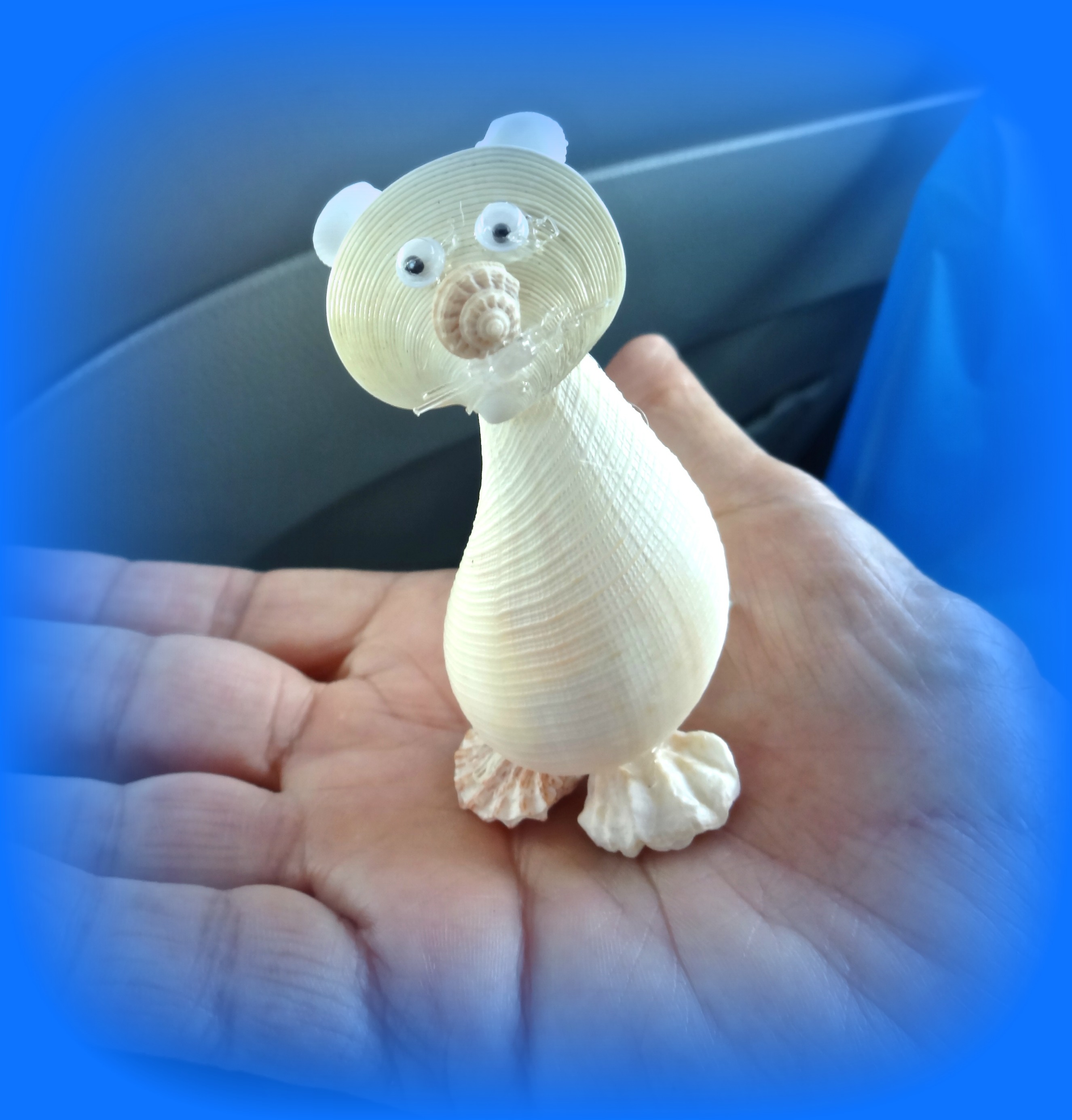
Seashell Cat Made at Bailey Matthews Shell Museum

EL, the Seashell Elephant Made at Bailey Matthews Shell Museum
Permanent and Temporary Exhibits at the Florida Shell Museum
The Bailey Matthews National Shell Museum on Sanibel Island offers more than 30 permanent exhibits, along with some that are on display for a limited amount of time. I remember prior to my first visit having this thought, “How can you build an entire museum out of a few sea shells?” Oh my goodness, I was so narrow-minded! I had the opportunity to see and learn about shells that I never even knew existed. Gorgeous shells, scary-looking shells, humongous shells, itty-bitty shells… and every kind in between. Not to mention that Bailey-Matthews houses some of the largest record-holding shells in the world. In fact, they have the largest known Goliath conch, Atlantic trumpet triton, horse conch, and lightning whelk. These things were massive! Take a look at some of my favorites…
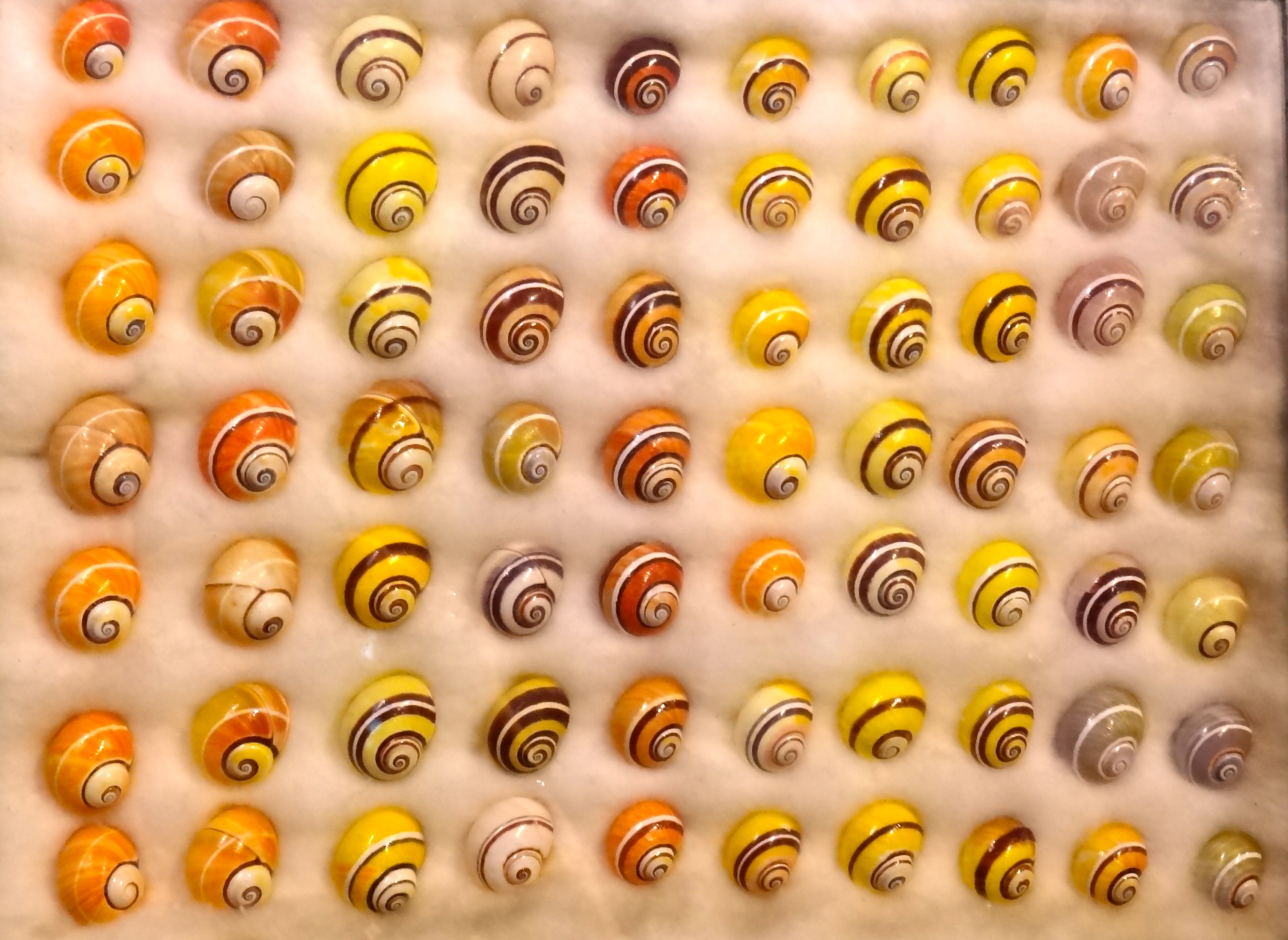
Colorful Shells on Display at Bailey Matthews
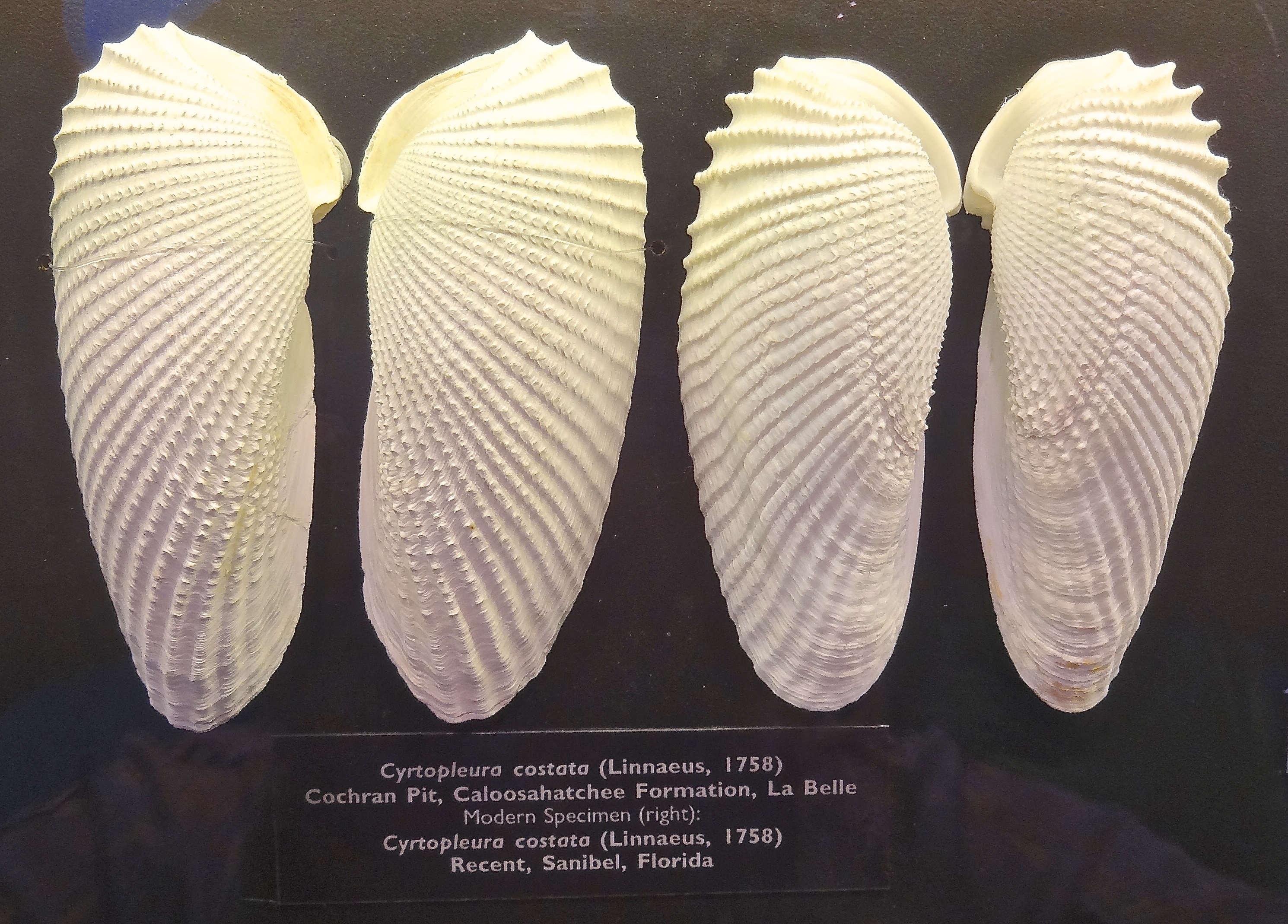
An Angel Wing Clam Shell Found on Sanibel Island (Cyrtopleura Costata)

Rare & Unique Shells at Bailey Matthews Shell Museum

Beautiful Pastel-colored Shells at the Museum

World-Record Sized Shells at Bailey-Matthews!

Scorpio Conch at Bailey-Matthews

Pacific Thorny Oyster at Bailey-Matthews

Large White Shell Displayed at Bailey-Matthews

Noble Scallop Shell – Nature’s Beautiful Colors
The Role of Sea Shells in History
Shells are not just beautiful and interesting to look at, but for centuries they’ve played an important role in culture, art, design, and medicine. For example… do you know what the oldest currency in the world is? Prior to visiting the Bailey Matthews Shell Museum, I didn’t know either. It’s shells! Apparently, even before coins were made of silver and gold and precious gemstones, the ancient monetary system was shells. In one of the exhibits at the Museum you’ll learn why shells were used as money.
“The money cowrie (Erosaria moneta) is the most widely circulated and longest enduring currency in history!”
~ The Bailey Matthews National Shell Museum Quote

Shells – The Oldest Money in the World!
On a more romantic note, seashells were also used as Valentines! Back in the early 19th century, shells were used as a popular art form developed by women in the Caribbean Islands. Oftentimes, sailors would create extravagant shell artwork and bring them home to their loved ones as the ultimate Valentine.

A Valentine Made Entirely from Shells
Additionally, shells were used to make some very practical things like buttons and bows. And fashion diva’s “back in the day” didn’t have Gucci, Coach, or any other designer-named purse so guess what they used? Yep, shells! And check out the intricacy (photo below) of the “flower” arrangement. It’s made entirely of sea shells, all with their natural color — every petal delicately and strategically placed. Among other things, there are 7 stems of lilac flowers made from 3,500 purple coquinas, all hand-collected on Sanibel Island. It took the artist and his wife 200 hours to complete this stunning piece.

Mussel Shells Used for Making Buttons

A Purse Made from Shells

Flower Arrangement Made Entirely from Shells
Calusa Indians: Florida’s Original Shell People
The exhibit depicting the Calusa Indians was fascinating. The Museum uses life-size models that look amazingly real. The Calusa were the original inhabitants of Southwest Florida (long before the first Spanish explorers) and made many of life’s necessities from shells; hence, the nickname “Florida’s original shell people.” Through the artifacts on display we know they used seashells for things like tools, weapons, utensils, jewelry, and shell spears were made for fishing and hunting. More information on this “people group” can be found on Wikipedia’s Calusa Indian page.
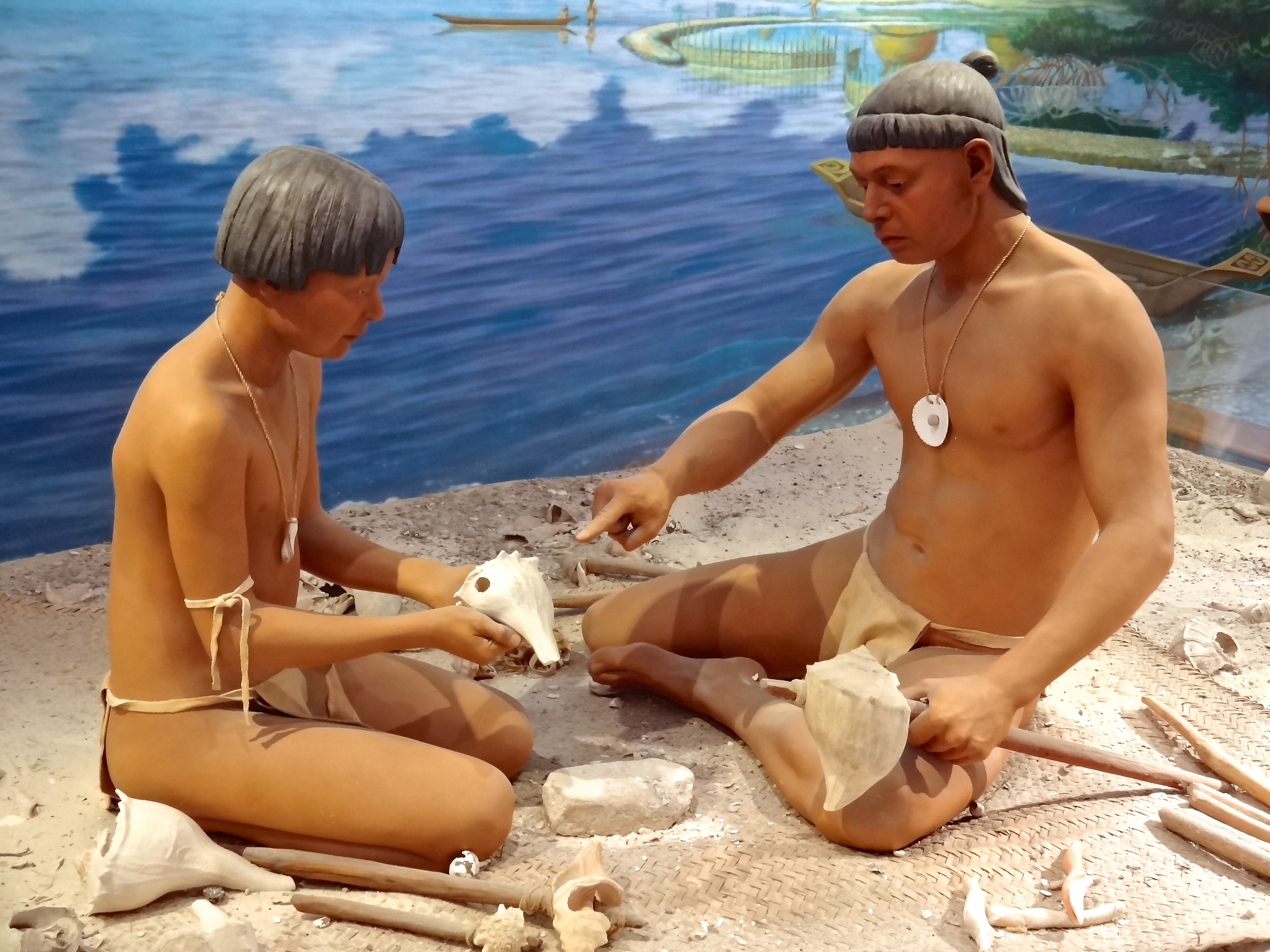
Calusa Indian Display at Bailey Matthews Shell Museum
Exotic Shells from Around the World
Upon entering the Bailey Matthews Shell Museum the focal point of the Great Hall is a display featuring exotic shells from around the world. You can’t miss it! It includes shell species from the Japanese Province, Indo-West Pacific and other distant locales typically only accessible with a passport. It’s an inexpensive way to do some island hopping, and, if you get tired the room has a few comfy benches.

The Great Hall Inside Bailey Matthews Shell Museum
The Prized Junonia
I’ve saved the best for last! The Scaphella junonia is the grand prize for shell collectors on Sanibel and its surrounding islands. It truly is the pride of Sanibel Island. The treasured junonia is such a special find because it rarely washes ashore. It’s a deep-water marine mollusk that lives off the coast, in the Gulf of Mexico. Here’s how the official Chamber of Commerce website for Sanibel and Captiva Islands describes it:
“The islands’ most coveted seashell, it belongs to the volute family. Its milky chamber is covered with brown spots on the outside, and the animal that occupies the shell is likewise marked. Shellers who find a junonia on Sanibel or Captiva get their pictures in the local newspaper!”
Yes… a junonia find is so rare that you practically become a celebrity by the locals if you scoop one up — right down to getting photographed for the local newspaper! HINT: the best time to find a junonia is right after a major storm, when all kinds of marine life comes ashore.

A Rare Find – The Scaphella Junonia!
In Conclusion…
The Bailey Matthews National Shell Museum is a great experience for the whole family. They have incredibly useful information for shellers of all types, from amateur to professional. In addition to viewing shells you won’t see anywhere else, their resources are second to none. And, even if you’re not an avid sheller, you’ll leave with a new appreciation for shells and the little creatures that inhabit them. It’s no wonder people come from all over the world to visit Bailey-Matthews Shell Museum! I highly recommend this experience.
DID YOU KNOW…
Yearly Memberships for Bailey Matthews National Shell Museum are available for as little as $50 for 2 people?
Purchase online before you go!
SPECIAL EVENT…
NAME: Beach Walk — LOCATION: Island Inn Beach
TIME: 9:00 AM Daily — DURATION: 60 Minutes — COST: $10 (Adult)
MEETING ADDRESS: 3111 West Gulf Drive, Sanibel — Purchase tickets online
Led by a Marine Biologist, you’ll learn about the shells, mollusks, and other marine life that has washed ashore!