
Posts Tagged “Things To Do in Florida”

Explore 5 Florida Botanical Gardens with Filthy Rich Roots!
Florida is synonymous with sunshine. And one of the many benefits of living in the Sunshine State is the spectacular year-round beauty that our semi-tropical climate produces. Something outstanding is blooming every month of the year. It’s no surprise, then, that Florida is home to some of the most breathtaking botanical gardens in the United States. Some are elegant and formal, others whimsical and amusing, still others aesthetically appealing with the addition of artistic elements and magnificent architectural components. Each one has a uniqueness all its own.
But have you ever thought about who planted those botanical beauties? Before they were drop-dead gorgeous gardens that delight you and I, they existed only in someone’s imagination. It’s interesting, to me, that the visionaries behind all that awesomeness were filthy rich businessmen. Yes, Florida’s most exquisite gardens have very, very rich roots! Buried deep within our sandy soil lies DNA from some of the wealthiest families in American history. I’ve chosen these 5 Florida Gardens with Rich Roots for you to add to your botanical bucket list.

Vizcaya Museum and Gardens on Biscayne Bay in Miami Florida
Vizcaya Museum and Gardens — Miami Florida
When I say Miami, “Gardens” is not usually the first thing to pop into someone’s head. Or the second, or third for that matter. Miami is best known for points of interest like South Beach, Ocean Drive, Art Decor Tours, Little Havana, Lincoln Road Mall and Bayside. But if you’ve been to this Southern Florida City and haven’t visited Vizcaya Museum and Gardens somewhere between your Cafe con Leche and Tostada Cubana, you’ve missed a botanical masterpiece!
Vizcaya’s Rich Roots
Vizcaya is a stunningly beautiful American Villa inspired by the palaces of Europe — a subtropical interpretation of an 18th-century Italian countryside villa. It was built in the early 1900s as the winter home for northerner James Deering, a retired millionaire businessman, and one of America’s wealthiest families. Mr. Deering was diagnosed with pernicious anemia, so his doctor recommended sunshine and a warm climate to lessen the effects of his affliction. (Turns out his pain was our gain!) As an avid sailor who owned three yachts, he also had quite a passion for landscaping and plant conservation. All of these things combined to play a huge role in the location of his 180-acre winter estate.
Vizcaya’s old-world European-inspired gardens are among the most elaborate of any in the United States. The formal gardens of Florence, Venice, and Rome served as the inspiration for James Deering. I absolutely love the use of sculptures, elaborate fountains, and other architectural structures strategically placed throughout the garden landscape. There are statues, urns, busts, and vases reminiscent of the Renaissance, which I find remarkably romantic. Apparently I’m not the only one that gets romantic vibes here, as Vizcaya Gardens is a popular wedding destination for multitudes of brides looking to create an enchanting fairy-tale backdrop for their special day. There are tons of charming, picturesque spots to choose from.
The horticultural collections in Vizcaya’s Gardens are so extensive and diverse (it took almost eight years to create the Garden), they have to be catalogued in a plant database. The Gardens include a subtropical forest, a mangrove forest, an exotic 2,000-specimen orchid collection, massive live oaks, Royal Palms imported from Cuba by boat, unusual plants such as Peach Palm and Giant Elephant Ear, and many endangered plants. Some are so rare they only exist here and in one or two other places in the world!
Vizcaya still remains an outstanding garden oasis for the rich and famous. It’s not unusual for Hollywood to come here for film shoots. They’ve recognized what we Floridians have known all along: Vizcaya showcases the history of the Mediterranean, the glamour of the Jazz Age, and the heat of the tropics! For hours, admission, calendar of events, and frequently asked questions, visit the Vizcaya website.

One of the Incredible “Secret” Alcoves at Vizcaya Gardens in Miami

Vizcaya Museum and Gardens on Biscayne Bay, Miami Florida
Bok Tower Gardens and Pinewood Estate — Lake Wales Florida
Tranquil and serene. Bok Tower Gardens gets my vote for the most peaceful place in Central Florida. It’s the ultimate great escape from Orlando’s thrilling [and sometimes over-crowded] tourist attractions. Since it’s one of my favorite places, Hubby and I have an annual membership to the Gardens. One of the great perk’s of membership is that we receive reciprocal benefits (including free admission) to many other spectacular gardens in Florida and around the country — places like Harry P. Leu Gardens and Museum in Orlando. Bok Tower Gardens is a mere 30-minutes from my home, so we visit frequently. There’s always something new blooming!
And with the recent addition of Hammock Hollow Children’s Garden, an educational and fun children’s learning area, I can introduce my toddler grandson to the beauty of “natural” Florida. Part of the expansion project also included an Edible Garden & Outdoor Kitchen. The Bok Tower Gardens special event calendar now includes various chef demonstrations and other culinary activities. This area also hosts after-dark soirées perfect for intimate gatherings. A favorite of visitors to Bok Tower Gardens is the infamous 205-foot-tall Singing Tower which houses one of the world’s finest carillons. Concerts occur twice daily, with additional live performances during peak periods.
Pinewood Estate’s Rich Roots
Pinewood Estate is a 20-room Mediterranean-style mansion from the 1930s. The Estate is open for self-guided tours throughout the year, with docents on hand to answer questions. The holidays are my favorite time to tour the mansion which features one of the best Christmas Home Tours in all of Florida. Each year, the local Garden Club creates a holiday “theme” and decorates each room of the mansion accordingly — truly spectacular! Charles Austin Buck, a Bethlehem Steel vice president was the original owner of this elaborate residence. And, like so many other historical homes in Florida, this was only a winter retreat. Can you imagine having a 20-room mansion that you occupied a mere 6-weeks out of the year? Mr. Buck was so wealthy that he brought 7 – 9 servants from his home in Pennsylvania with him each winter. He hired a manager to live in the house and take care of it the rest of the time.
For a glimpse of Pinewood Estates at Christmastime, read my article about Bok Tower Gardens during December.
TIP: Wear comfortable shoes… it’s easy to spend an entire day at this National Historic Landmark!

Beautiful Winter Blooms at Bok Tower Gardens in Lake Wales Florida

Bok Tower Gardens – National Register of Historic Places

Pinewood Estate – Former Winter Home of Charles Austin Buck
Albin Polasek Museum and Sculpture Gardens — Winter Park Florida
The Albin Polasek Sculpture Garden is located just a short drive from Orlando, the theme park capital of the world, in beautiful Winter Park, Florida. I’ve always loved everything about Winter Park — the architecture, casually elegant restaurants, shopping on Park Avenue, the yummy Winter Park food tours, museums, art festivals, and relaxing Central Park with its inspirational Peacock Fountain. But of all my visits to this wonderful place, only recently did I discover the Albin Polasek Museum & Sculpture Gardens. Hubby and I spent several hours here, and had we packed a lunch we could have lingered longer.
Mr. Polasek was a world-renowned Czech sculptor. In 1950 he retired to Winter Park, at the age of 70. Prior to that, he headed the Department of Sculpture at the Art Institute of Chicago for nearly three decades. The Polasek Museum is the actual home and art studio where Albin Polasek lived and worked. Many original paintings, drawings and small clay sculptures are on display here. While touring the Museum, I learned about the history of this incredibly talented man. But no amount of reading could have prepared me for what I was about to see in the Polasek Sculpture Gardens located on the property behind the Museum, right along the edge of scenic and serene Lake Osceola.
My goodness, these sculptures are absolutely amazing! When intermingled with many native Florida and subtropical garden species, it becomes a botanical utopia; simply perfect! I was blown away by both the created and natural beauty represented in this three-acre Garden. Not withholding the fact that some of Albin Polasek’s greatest artistic achievements came as a severely disabled person. Wow… if only these sculptures could speak! (You may be interested in a more comprehensive article on the life and legacy of Albin Polasek here.) This is truly a “not to miss” attraction if you appreciate outstanding outdoor gardens and are ever in the Central Florida area.
Winter Park’s Rich Roots
The entire town of Winter Park was founded by wealthy Northern industrialists as a winter getaway. This classy place might be geographically close to Disney and other Central Florida tourist attractions, but it’s a world apart in almost every sense. Its got style and substance! Winter Park has never lost its late-19th-century charm — brick-paved streets, stately turn-of-the-last century historic homes, 200-year-old live oaks with Spanish moss, and meandering canals once used for logging. And because money begets money, Winter Park still attracts multimillionaires today. Don’t be surprised if you rub elbows with a member of the Orlando Magic or see a movie star at a Park Avenue sidewalk cafe…

Albin Polasek Sculpture Gardens in Winter Park Florida

Pilgrim at the Eternal Gate Sculpture by Albin Polasek

Albin Polasek Museum and Sculpture Gardens
Edison & Ford Winter Estates and Botanical Garden — Fort Myers Florida
Did you know Thomas Edison (the innovative inventor) and Henry Ford (the Ford Motors car mogul) were very good friends? Yes, indeed. Such great friends that they purchased adjoining properties in southwest Florida in the early 1900s as their winter estates. The 21-acre estate features the former homes of the two men, a research laboratory, museum, and botanical gardens.
It’s a lovely waterfront location right alongside the Caloosahatchee River in Ft. Myers. Here, you’ll get a taste of what tropical, “old-Florida” used to be like. Whether you choose the guided or self-guided tour, you’ll receive so much historical information you’ll feel like you’ve been transported back in time. In the Gardens, it’s hard to believe that a few of the original trees planted during Edison’s time are still standing. Hint: check out that famous banyan tree! Good golly miss molly, wait till you see the size of that thing. I won’t give away all the fascinating facts, but you practically need a wide-angle lens to capture the whole thing. Additionally, there are 1700 plants representing 400 species from six continents on display. Hard to find a more diverse horticultural collection anywhere! To get a heads-up of what’s blooming in any given month, check out the Edison Ford Gardens “what’s blooming” page on their website.
Edison & Ford Winter Estates’ Rich Roots
Of course we’re talking about Henry Ford and Thomas Edison here. This popular Florida attraction represents some serious wealth. The net worth of these two men individually is massive, with a capital “M!” When combined, it’s mind-boggling. By the mid-1920s, Henry Ford’s net worth was estimated around $1.2 billion. That’s billion, with a “b!” At age 57 he was worth $188 billion, making him one of the 10 richest people of all time! When Thomas Edison was awarded the Congressional Gold Medal in 1928 Congress valued his work at nearly $15.6 billion. Imagine the good times they had together on that property in Fort Myers that you and I get to visit…

Largest Banyan Tree in the Continental U. S. at Edison & Ford Winter Estate

Gorgeous Bamboo at the Edison Ford Winter Estate in Ft Myers Florida

Botanical Beauty at Edison Ford Winter Estate
Harry P. Leu Gardens and Museum — Orlando Florida
Leu Gardens is vintage Florida at its best! It’s easy to imagine Florida the way it used to be while strolling this massive Garden comprising nearly 50 acres. It’s nicely divided into 14 distinctly different areas (you’ll need a map). A few of them are formal, like the Rose Garden, but most sections appear more “natural.” While meandering through the landscape that contained the Palms, Cycads & Bamboo, I envisioned old-Florida — the way the Sunshine State looked pre-Disney. I was waiting for a gator to emerge at any moment from the dense subtropical terrain. Stand still long enough on Lake Rowena Overlook and in your minds-eye you’ll see the logging of humongous cypress trees that were transported via steamboat through Florida’s chain of lakes and canals.
Yes, old-Florida is becoming extinct. Vanishing. Endangered as our beloved manatees. But there are remnants, if you know where to look. Thank goodness Harry P. Leu Gardens is doing their part to preserve Florida’s cultural identity, for many generations to come, I hope. You’ll notice Leu Gardens has a personality all her own; it’s old Florida today!
Make sure you save time to tour the Leu House Museum; it’s included in the entry fee. A restored 19th century Victorian-style home, it’s one of the oldest buildings in Central Florida. Some of the architectural details include a tin roof and pine floors. Before it opened to the public in 1961, four different families resided there. The stories told by our docent about these wealthy owners were captivating. If you want a sense of what turn-of-the-century Florida living was like for affluent landowners, take this guided tour!
Harry P. Leu House’s Rich Roots
From a cotton farmer (1st owner) to an actress (2nd owner) to a steel manufacturer (third owner) to the Leu Family (4th and final owner), this house-turned-Museum has had quite a rich history. The most intriguing of the occupants was Duncan Pell, a prominent New York businessman who divorced his first wife in order to marry actress Helen Gardner. Ms. Gardner went on to create her own film company (a first for a woman) and became very well known throughout Orlando. Joseph and Martha Woodward were the 3rd owners; wealthy industrialists who only used the home as a winter residence. Mr. Leu, the last resident, owned a very successful industrial supply company. He and his wife traveled the world and brought back seeds and plants for their gorgeous gardens.
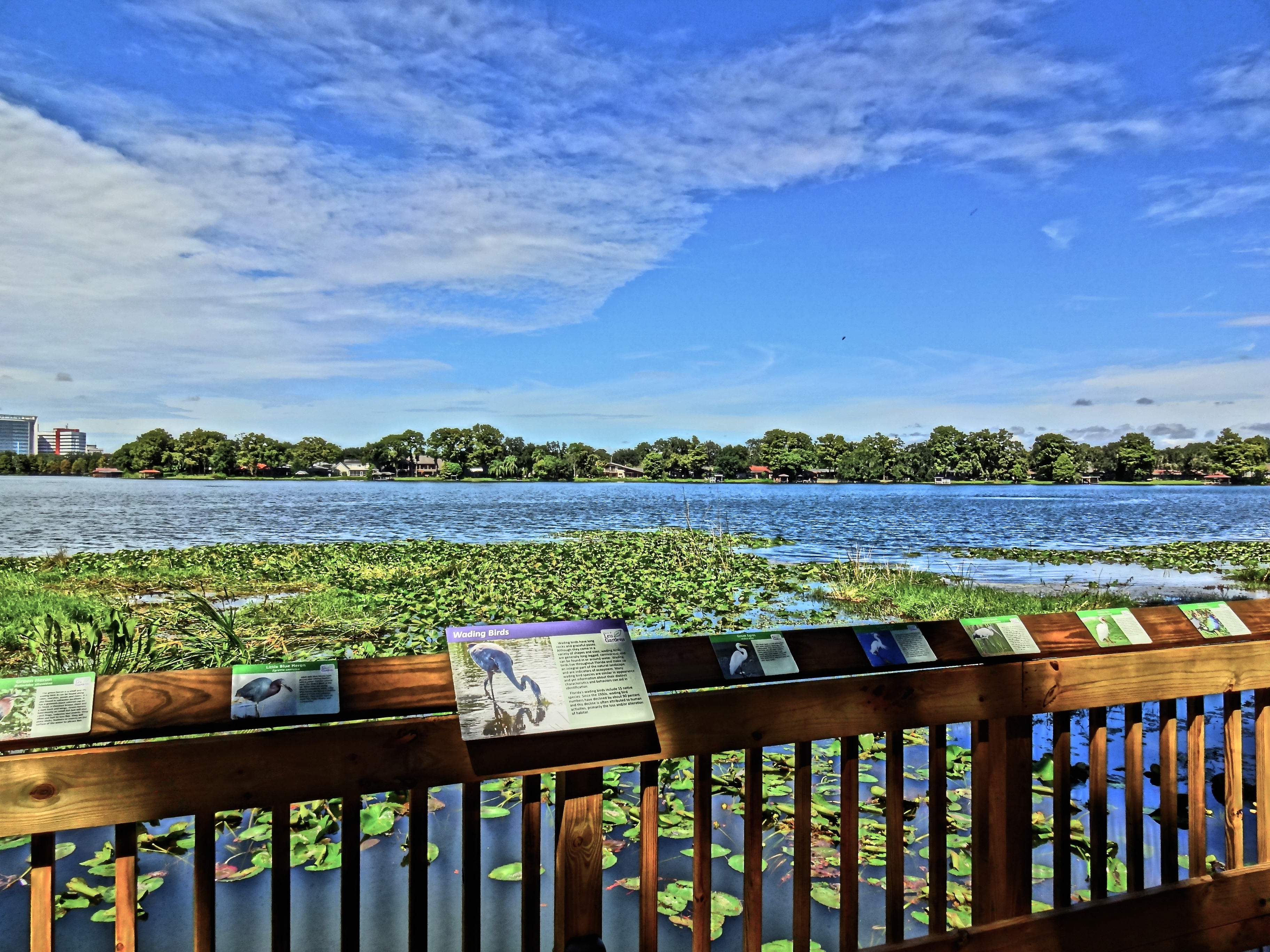
Lake Rowena Overlook at Harry P. Leu Gardens

The Formal Rose Garden at Harry P. Leu Gardens

Tropical Plants at Harry P. Leu Gardens

Harry P. Leu Gardens – National Register of Historic Places
Have you been to any of the 5 Florida Gardens with Rich Roots? Or perhaps you know of another garden here in the Sunshine State with roots back to the rich and famous. Please share with our readers via the comment box below!

The Morse Museum – Winter Park, Florida
The Morse Museum — A Winter Park Winner!
Are you an admirer of Tiffany glass? I wasn’t, until I visited the Morse Museum in Winter Park, Florida. At the risk of offending long-time Tiffany glass aficionados, I just couldn’t understand what all the fuss over Tiffany lamps was about. I thought they were just okay, nothing special, and certainly not superb enough to warrant the kind of bucks required to purchase an original. In fact, I used to think the Tiffany connoisseurs were a bit crazy to dish out such colossal sums of money at those high-end auction houses — more money than brains is what I thought. But my attitude changed when Hubby and I spent some serious time at The Morse Museum during my birthday getaway to wonderful Winter Park.
“Judging art is no trouble at all. Everyone does it. Understanding art calls for time and thought. That is where the excitement and fun are.”
~Hugh F. McKean
World’s Most Comprehensive Collection of Works by Louis Comfort Tiffany (1848-1933)
Although there are other galleries and exhibits at The Morse Museum, the majority of the building houses the world’s most comprehensive collection of works by Louis Comfort Tiffany. Since I wasn’t a Tiffany enthusiast, I had no idea his artistic talents were so vast. Whenever I heard the name “Tiffany” I automatically associated it with Tiffany lamps. But I learned there was so much more — including jewelry, pottery, enamels, paintings, mosaics, blown glass, and leaded-glass windows. In fact, Louis Tiffany was a painter, a decorator, an architect, a photographer, and a designer of furniture. In 1881 he was commissioned to decorate Mark Twain’s residence in Hartford, Connecticut. The following year he was commissioned by the 21st President of the United States, Chester Arthur, to decorate the Blue Room, East Room, a corridor, and the State Dining Room of the White House. His achievements were as broad as his success which extends across America, through Europe, and around the world.
The Morse Museum offers a short, but in-depth film which beautifully covers the life and art of Mr. Tiffany. It plays continuously, which enables visitors to enter and exit the theatre at any given time. I recommend watching the film before touring the galleries. That’s where I became educated regarding Tiffany’s accomplishments. Having that knowledge brought a huge appreciation for his works as I viewed the masterpieces on display.
The Morse includes works from every medium and type produced by Tiffany, and they’re nicely separated in many different rooms. Each room has a pamphlet specific to that gallery. Make sure to pick one up every step of the way. Not only does it include an Object Guide with information on each individual item in the room but also gives much history. By the time I completed my tour I had accumulated nearly 20 of them, which, when woven together, creates a wonderful biography of Mr. Tiffany. They’re a nice keepsake and souvenir. NO PHOTOGRAPHY of any type (camera, cell phone, video, etc.) is allowed in the Morse Museum, which is another good reason to take home the Object Guides, which contain small black & white photos of the most popular Tiffany works.

Morse Museum Object Guide
The Chapel
One of my favorite parts of the Morse Museum was the chapel. Mr. Tiffany originally created the chapel interior for an exhibit at the Chicago world’s fair in 1893. When the fair ended he reinstalled it at his New York City studios. After that, the chapel interior was installed in Cathedral Church of Saint John the Divine in New York. Eventually, the chapel fell in disrepair so Tiffany reacquired it, restored it, and moved it to his private residence on Long Island. And currently, it’s on display at the Morse Museum. All of the elements of the chapel exhibit are original, except two of the four benches. Amazing, considering it dates back to 1893! With the marble and glass-mosaic furnishings, four huge leaded-glass windows, sixteen glass-mosaic encrusted columns, and 10-foot by 8-foot chandelier, it was difficult keeping my camera concealed. More than any other part of the Museum, I really wanted a few photos of the chapel. It was soooo tempting to sneak a pic… but I obeyed the rules!
Since visitors are allowed to enter the chapel and sit on the benches, hubby and I did so. There was not only appreciation for the incredible talent on display, but everyone present had a deep reverence for the religious aspect. It was so quiet we could have heard a pin drop, and the atmosphere seemed to carry a Divine presence.
Laurelton Hall — Louis Tiffany’s Most Personal Design Project
In addition to galleries with Tiffany art glass, pottery, jewelry, and Tiffany lamps, a large section of the Morse Museum is dedicated to art and architectural objects from the most personal design project of Tiffany’s career — Laurelton Hall. About a half dozen rooms have been re-created to simulate the appearance and character of Tiffany’s private residence.
Laurelton Hall was a vast country estate located on 580 acres on Cold Spring Harbor, Long Island. The mansion consisted of 84 rooms on 8 different levels. He also built other structures on the property including conservatories and stables, and 60 acres of gardens. Every aspect of the estate was designed by Mr. Tiffany, and he was the interior decorator as well. Many of his own creations shared space with objects he collected from his travels around the world. Upon his retirement in 1918, Laurelton Hall became a study center for young artists and a museum for his collections and personal works. Mr. Tiffany died in 1933 and by 1940 a lack of finances forced the Tiffany Foundation to move to New York City and sell his prized collections as well as Laurelton Hall estate. Tragically, a fire gutted the mansion in 1957.
The Florida Connection
As news of the fire spread, Jeannette McKean (founder of The Morse Museum) along with her husband, Hugh, travelled from Florida to Laurelton Hall and purchased whatever Tiffany art pieces survived on the estate. Jeannette had been a long-time collector of Tiffany’s work, and Hugh was an artist himself who studied at Laurelton Hall. Undoubtedly, they were two of Mr. Tiffany’s biggest fans. The husband and wife team had the items shipped back to Florida and became the overseers of a massive restoration project on the Tiffany pieces (including the previously mentioned Chapel). The film we watched chronicled the process which was nothing short of remarkable. Jeannette and Hugh used the help of former Tiffany employees, artists who studied at Laurelton, collectors, and scholars to painstakingly piece together the life and art of Louis Tiffany so that visitors like me can experience it at the Morse Museum. Their collections were built over a half-century. Jeannette founded the Winter Park Morse Museum in 1942 and named it after her grandfather, Charles Hosmer Morse.
The McKeans set up the Charles Hosmer Morse Foundation to support the private Museum, and today it is able to operate without contributions of public funds. Trust me, the very modest admission fee of Adults $5/ Seniors $4/ Students $1 is well worth it. As an added bonus, Friday nights from 4-8pm are free from November through April! There’s always something special happening at The Morse Museum like “Holidays at the Morse,” “Spring at the Morse,” and “Summer at the Morse.” Each season you’ll find options like live music, curator tours, art demonstrations, lecture series, organized children’s events, or free films and matinees. Additionally, throughout the year, many of the Holidays have free admission. Visit their website at http://www.morsemuseum.org for hours of operation and more information.

Exhibitions at the Morse Museum 2015-2016 Guide
The Daffodil Terrace
After leaving the Tiffany Chapel exhibit we headed for the Laurelton Hall section of the Museum. There was a small area aptly named “Introduction to Laurelton Hall,” followed by the Daffodil Terrace. Mr. Tiffany loved daffodils. In fact, it was his favorite flower. Not only did he cultivate and plant them in prominent locations throughout Laurelton Hall, he made his own versions in glass for windows and lamps.
Just like the original Daffodil Terrace at Mr. Tiffany’s Long Island Estate, the one at the Museum contained eight Carrara marble columns each with concrete capitals encrusted with cast-glass daffodils. In the center of the columns was a skylight made of iridescent glass in a pear tree motif (his Long Island residence had a real pear tree in a planter that poked through an opening in the skylight). The ceiling was painted cedar wood, (the original used stenciled cedar Mr. Tiffany acquired in North Africa), and more than one hundred molded tiles in geometric and floral motifs, perfectly replicated right down to the wood-grain patterns of the originals. The Daffodil Terrace has a small sitting area where Museum guests may rest and overlooks a beautiful courtyard. This is the only area in the entire Museum that allows photography.
The Daffodil Terrace leads to the entrance of Laurelton Hall, which contains an original Iron Gate, circa 1904. Here, we were able to view replicated rooms of Tiffany’s mansion including the Dining Room, Living Room, Reception Hall and Study, all containing many original works of art.

Concrete Capitals Encrusted with Cast-glass Daffodils
In Conclusion
My visit to the Morse Museum was worth far more than the meager $5 admission fee. You can scurry through and be out in an hour, or, like me you can tarry and read the Gallery Guides as you go for a deeper appreciation of the life and art of an American Icon. The Staff/volunteers at the Museum were all friendly and beyond helpful. Most of the larger rooms had a dedicated Security Guard, especially in the Tiffany exhibits. I had questions along the way, all of which were impressively answered by the Security team who were extremely knowledgeable. Feel free to ask them anything. I got the impression they actually liked the engagement.
Yes, Tiffany Studios in New York City made leaded glass lamps by the thousands — but Louis Comfort Tiffany also made unique one-of-a-kind massive windows and little known works of art that can only be seen in one place… the Morse Museum in Winter Park, Florida! I highly recommend this Museum!

A Few of the Tiffany Lamps from the Morse Collection Listed in the 2015-2016 Guide
ADDITIONAL POINTS OF INTEREST & ACTIVITIES IN WINTER PARK
Albin Polasek Museum and Sculpture Gardens
Winter Park Food and History Tour
Have you been to the Morse Museum? Please share your experience with our readers, or let us know the name of your favorite Florida Museum.